OUSD2026-09-30 17:03:17OUSD supply tops 477.3 million within two hours of launch, with more than 90% on TempoOpen Standard’s dollar stablecoin OUSD reached a total cross-chain supply of about 477.3 million tokens within two hours of launch, according to BlockBeats. Reserve assets were reported at $477.3 million, indicating a 100% reserve coverage ratio at that point. The reserve mix consisted of roughly $211.2 million in U.S. Treasuries, accounting for 44.25%, and about $266.1 million in U.S. dollar cash, making up the remaining 55.75%. On the Tempo network, OUSD’s circulating supply stood at 434.2 million tokens. Cumulative transfer volume on that network reached $533.9 million. Based on the figures provided, Tempo accounted for more than 90% of OUSD’s circulating supply shortly after launch.140
Open USD2026-09-30 15:34:50Open USD Challenges Tether and Circle With an Equity-Sharing Stablecoin ModelOpen Standard is entering the stablecoin market with Open USD, pitching a structure that differs from the models used by Tether and Circle. According to CoinDesk, CEO Zach Abrams said the "overwhelming majority" of Open Standard’s equity will be distributed over time to partners, with allocations tied to how much they contribute to growing the stablecoin. Abrams described the concept as "building money," framing the effort as a different way to align incentives around stablecoin expansion. The company is positioning Open USD directly against the two dominant issuers, but with a model centered on sharing ownership with ecosystem partners rather than keeping that equity concentrated internally. The remarks were published by CoinDesk in a report by Krisztian Sandor, edited by Stephen Alpher.150
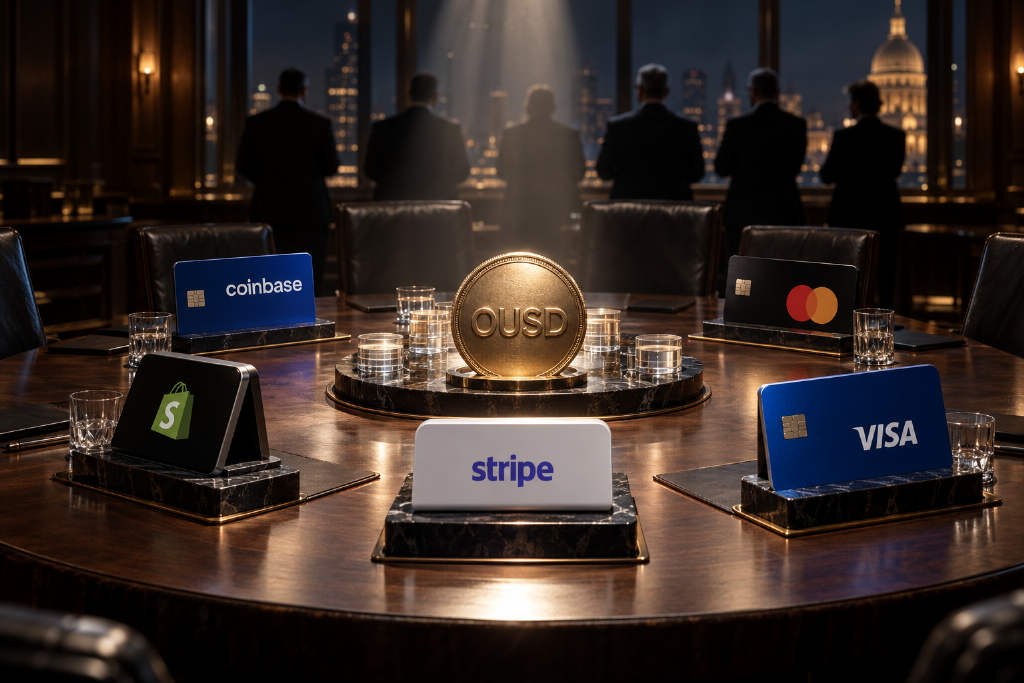
Open Standard2026-09-30 15:55:32Coinbase, Visa and three others become Open Standard founding partnersOpen Standard has named Coinbase, Mastercard, Shopify, Stripe and Visa as its first five founding partners, according to comments from CEO Zach Abrams on Sept. 30. Abrams said the company is not structured as a consortium run by hundreds of participants. Instead, day-to-day operations are handled by management, while a smaller group of founding partners holds ownership and governance rights. Other partners will be rewarded based on their contribution to OUSD supply and transaction activity. Abrams said the five companies invested to become founding partners and each received an equal share of the initial equity. He also said they committed more than $1 billion over the coming months to build liquidity for OUSD. The exact amount invested by each company and their specific ownership stakes were not disclosed. At present, those five firms are the only investors in Open Standard. He added that the founding partner group is expected to expand to around 10 to 12 companies, with a board made up of founding partners also planned. Separately, the number of partners planning to integrate OUSD has grown from more than 140 in June this year to more than 200, with recent additions including SBI Holdings, UBS and fintech company Jeeves.130
Open Standard2026-09-30 15:58:34Open Standard says OUSD governance rests with founding partners as first five backers commit over $1 billionOpen Standard CEO Zach Abrams said the company is not a consortium run by hundreds of participants, according to CoinDesk. Instead, day-to-day operations are handled by management, while a smaller group of founding partners holds ownership and governance rights. Other partners are rewarded based on how much they help expand OUSD supply and trading activity. Abrams said Coinbase, Mastercard, Shopify, Stripe, and Visa have invested as the first five founding partners and each received an equal share of the initial equity. He added that the five companies have committed more than $1 billion over the coming months to build liquidity for OUSD, though the exact amount invested by each firm and their individual ownership stakes were not disclosed. At present, those five companies are Open Standard’s only investors. Abrams said the number of founding partners is expected to grow to around 10 to 12, with plans to form a board made up of those founding partners. He also said the number of partners planning to integrate OUSD has risen from more than 140 in June this year to more than 200, with SBI Holdings, UBS, and fintech company Jeeves among the latest additions.120
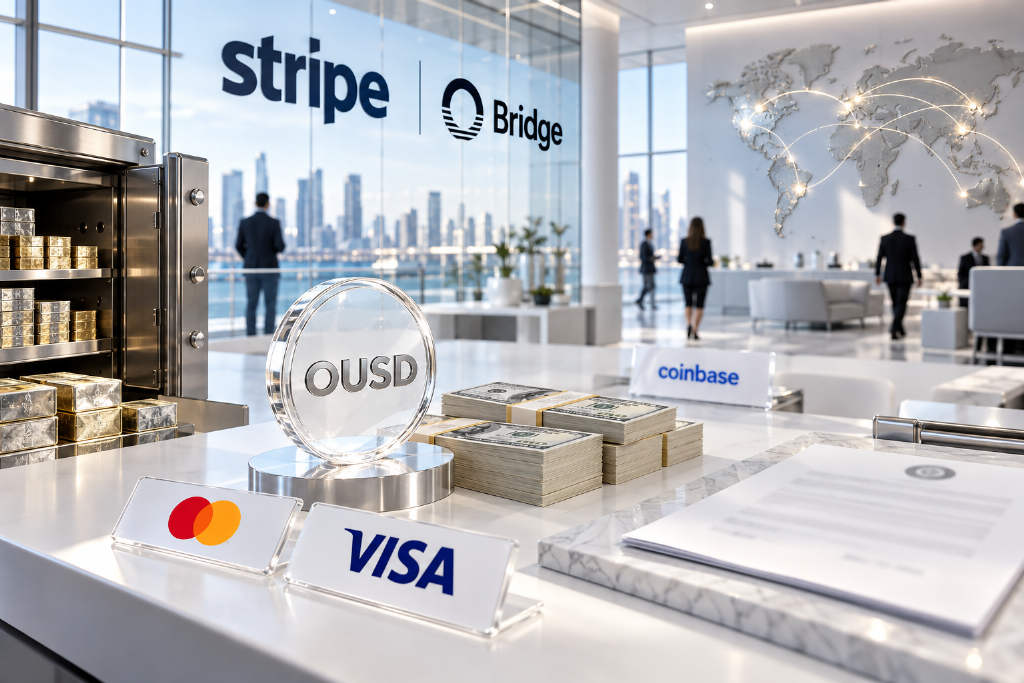
Open Standard2026-09-30 15:21:45Open Standard launches OUSD with free 1:1 minting and redemptionOpen Standard has launched OUSD, a U.S. dollar stablecoin aimed at businesses and developers building internet-native financial products. The token is positioned for use across banking, cross-border payments, settlement and institutional trading. According to ChainCatcher, OUSD currently offers four integration paths, with APIs and tools covering settlement, payment orchestration, trading, foreign exchange conversion, wallets and card services. All access channels support free minting and redemption at a 1:1 exchange rate with the U.S. dollar. Businesses can already connect through Mastercard, Stripe and the Visa Stablecoin Platform, while a Coinbase integration is scheduled to open on Oct. 1. OUSD will natively support Base, Ethereum, Solana and Tempo, and it is set to debut on both centralized and decentralized trading venues including Coinbase, Kraken and Uniswap. The stablecoin is issued by Bridge, a Stripe-owned company. Its reserves are held with BlackRock, Lead Bank and BNY Mellon, with reserve attestations to be published monthly. Open Standard said it now has more than 200 partners spanning financial institutions, fintech companies, banks and global enterprises.160
Open Standard2026-09-10 05:37:41Open Standard CEO says Open USD will share economics based on transaction volume, not AUMOpen Standard founder and CEO Zach Abrams said on X that the project has received heavy inbound interest from companies since announcing Open Standard and Open USD earlier this summer. Abrams argued that stablecoins were supposed to be a better form of the dollar, yet most businesses still use them mainly to park assets rather than to move money in day-to-day transactions. He pointed to one friction point: when companies temporarily redeploy idle funds, each redemption often carries a 5 to 10 basis point fee, which can wipe out the benefit. He also said U.S. fintech firms continue to run both fiat and stablecoin rails because fiat fees are fixed and reserves can still be invested in money market funds. For Open USD, Abrams said the model will reward usage instead of assets under management, send as much reserve yield as possible to developers that integrate the stablecoin, charge developers a small transaction fee, and judge the company by transaction volume. He added that Open USD will not charge the burn or redemption fees commonly seen with other stablecoins.800
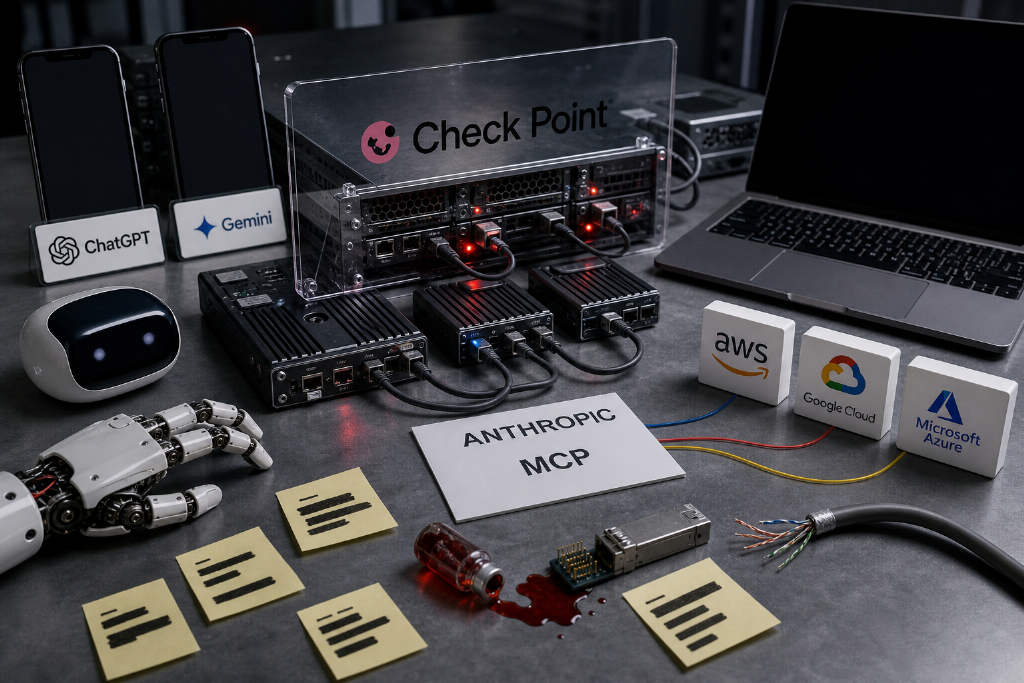
MCP2026-09-01 07:39:38MCP Servers Become New AI Attack Surface: 40% Found VulnerableSecurity firm Lakera analyzed 10,000 MCP servers and found that roughly 40% have exploitable security weaknesses. Threats include tool poisoning and rug pull attacks, where attackers can manipulate AI agent behavior via malicious instructions. Check Point and other vendors are developing dedicated AI firewalls. MCP, released by Anthropic in November 2024 as an open standard, had over 10,000 active public servers by December 2025, with support from AWS, Google Cloud, and Azure. Major AI platforms like ChatGPT, Gemini, and Microsoft Copilot have adopted the protocol.900
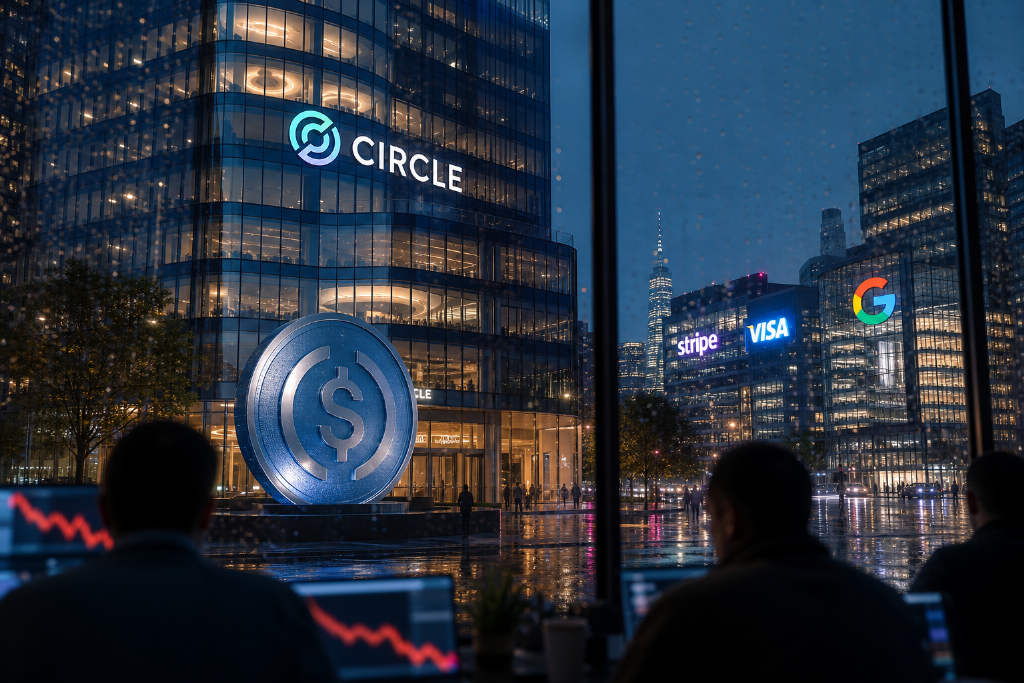
Circle2026-08-22 04:49:07Artemis says Circle sell-off misses the bigger picture as CRCL drops 17%Circle’s stock, CRCL, fell 17% on the day the Open Standard alliance was announced, with the market treating the move as a warning that a new coalition-backed stablecoin could challenge the dominance of USDC and Tether. Artemis disagrees. In its latest research, the firm argues that investors are pricing Circle as a rate-sensitive stablecoin issuer while overlooking a broader push to build a full-stack money platform for the internet. The report rests on several points. Artemis projects the stablecoin market can compound at 40% annually and exceed $1 trillion by 2030. It also argues that stablecoin competition is still governed by liquidity and network effects, which helps explain why Circle and Tether continue to control more than 80% of supply despite hundreds of tokens already in circulation. In that framework, Open Standard and OUSD are not automatically existential threats. Artemis also lays out a valuation case. Circle’s revenue run rate is put at about $2.8 billion, against a market capitalization of roughly $18 billion, or 6.7x sales, below the 14x multiple cited for payment networks. Under a scenario where stablecoin supply reaches $1 trillion, USDC captures 20% share, and rates sit at 2%, Artemis estimates Circle could generate $4 billion in interest income alone, with added upside from Circle Payments Network and Arc. That leads to a $50 billion valuation case for CRCL.1230